Author: admin

  • Meet Christian Buggedei: How to build a portal – part two

    Meet Christian Buggedei: How to build a portal – part two

    This article is 205 words and a one-minute read.

    Meet Christian Buggedei from the Berlin Institute of Health at Charité. He’s part of the team coordinating work to define and build the EU-CiP – European Cancer Information Portal.

    In the video, Christian explains how the project is uniting technical and non technical experts at a critical point – defining what the portal should do and how it will work.

    This is part two of a series of videos called ‘how to build a portal‘ that explores the development of the EU-CiP. Catch up with part one, when the coordinators of EU-CiP discuss their vision for the project.

    You can add local language captions in your YouTube settings.

    About the EU-CiP project

    The goal of this project is to build EUropean Cancer Information Portals (EU-CiPs) which will provide reliable and easy-to-access cancer information for citizens in Europe. This will help people find information they need and make informed decisions about their life and healthcare.

    Cancer can affect everyone, either directly or by affecting a loved person.The EU-CiP project will create a home for information about prevention, diagnosis, treatment and everything else related to cancer. We want to reach patients, their caretakers, families, friends and everyone who might be confronted with cancer during their life.

  • EU-CiP, CANDLE and UNCAN-Connect news roundup

    EU-CiP, CANDLE and UNCAN-Connect news roundup

    The EU-CiP project is closely aligned with other European Cancer projects like CANDLE and UNCAN-CONNECT. These three, in particular, are fundamental to building the architecture to support future proof improvements in cancer research data and patient support.


    This article is a roundup of recent news across these Cancer Mission projects as they finish their first calendar year.


    CANDLE

    The following items are from CANDLE’s social media where we recommend a follow to receive news first. You can also bookmark the project website.

    • The CANDLE team contributed to SHINE 2Europe‘s webinar “Building Bridges in Digital Health Innovation”. [read more]
    • The Dutch National Cancer Data Node (NCDN-NL), established with support from CANDLE, convened over 40 national oncology leaders on 8 December to shape an EHDS-ready cancer data infrastructure. Take a look at the event and access the slides.
    • The team held the first Persona Workshop with the EU cancer stakeholder community. This session aimed to build personas mapped to the functions of the National Cancer Data Nodes and the European Health Data Space context. [read more].

    UNCAN-Connect


    EU-CiP

  • Published: BIH – Berlin Institute of Health @Charité press release on EU-CiP project

    Published: BIH – Berlin Institute of Health @Charité press release on EU-CiP project

    This article is 396 words and a three-minute read.

    The BIH – Berlin Institute of Health @Charité has published a press release on the launch of the EU-CiP project. You can read the original here.

    Development of the European Cancer Information Portal Launched 

    The Berlin Institute of Health at Charité (BIH) is coordinating the central European research project “EU-CiP” (European Cancer Information Portal). This project is funded with 12 million euros over four years by the European Union’s Horizon Europe programme.

    For the first time, it establishes a European network of patient-centered, trustworthy, and evidence-based cancer information portals. EU-CiP is a key component of the European Cancer Patient Digital Centre (ECPDC), developed under the Europe’s Beating Cancer Plan and the EU Mission on Cancer. 

    EU-CiP’s objective is to enhance health literacy, empower patients, and promote equality in access to cancer care information across Europe. Under the scientific leadership and coordination of Prof. Dr. Roland Eils, Founding Director of the BIH Centre of Digital Health, EU-CiP unites 40 partner institutions from 18 countries. This includes patient organisations, clinical and scientific institutions, technology partners, and health literacy experts.

    “With EU-CIP, we are creating a pan-European digital knowledge infrastructure that places the needs of patients at its core. Our goal is to improve access to trustworthy information about cancer diagnosis, treatment, and aftercare for all people in Europe, regardless of language, background, or level of education,” says Prof. Eils.

    EU-CiP builds a shared library of evidence-based content accessible to all member states, featuring continuously reviewed and updated information by patient organisations in cooperation with medical societies and AI experts.

    The German Cancer Information Service at the German Cancer Research Center (DKFZ) in Heidelberg is involved nationwide as an important development partner for content and infrastructure. 

    Participatory development and implementation 

    Initially, national and regional portals will be established in 11 member states, equipped with innovative services like a multilingual AI chatbot for personalised information. The platform also provides tools for content creation, presentation, and communication, with gradual integration into existing electronic health infrastructures. Particular focus is placed on high-incidence cancers, paediatric cancers, and tumours with poor prognosis. 

    Development and implementation are carried out in a participatory manner, involving patient representatives, patients, citizens, healthcare professionals, medical journalists, and infrastructure experts.

    The initiative is aligned with the European Cancer Plan and the EU Cancer Mission, with EU funding underscoring its strategic importance for the digital transformation of cancer care in Europe. 

    ENDS
  • NEW: Explainer on how EU-CiP will work

    NEW: Explainer on how EU-CiP will work

    This article is 184 words and a one-and-a-half-minute read.

    Creating a central hub – the cancer information portal – to house scientifically sound, accessible and reliable content and then working with member states to pilot national portals is not a simple process.

    The coordination team have broken down the stages of the project for you to explore in more depth.

    Puzzle pieces

    On the new dedicated page, you can see how the pieces of the EU-CiP puzzle fit together including:

    • An introduction to the partners
    • How the content creation group and board will curate accurate information on all stages of a cancer patient’s journey
    • Explanation on how technology will be used to create an information portal serving diverse needs with reliable, evidence-based information in lay-term language across Europe
    • Development and launch of the pilot portals
    • How social sciences and humanities (SSH) play a central role to address challenges of health literacy promotion, patient empowerment, and information accessibility
    • Exploration of a transparent governance structure
    • Information on EU-CiP as foundation layer to the European Cancer Patient Digital Center
    • Links between sister projects (CANDLE, UNCAN-Connect) as part of EU Mission: Cancer and Europe’s Beating Cancer plan.
  • How to build a cancer information portal – part one: Harald Wagener and Roland Eils introduce the EU-CiP project

    How to build a cancer information portal – part one: Harald Wagener and Roland Eils introduce the EU-CiP project

    This article is 137 words and a one-minute read.

    Meet Harald Wagener and Prof. Roland Eils, Berlin Institute of Health, who are coordinating EU-CiP. They are two key people behind the European Cancer Patient Digital Centre (ECPDC) concept which this project is a foundation layer.

    The concept of a ‘portal’ is abstract but the result will improve everyday lives of EU citizens and their families dealing with a cancer diagnosis and treatment.

    In this video, Harald and Roland introduce the #CancerInfoPortal project and how it will build EUropean Cancer Information Portals (EU-CiPs). They explain how the portals will provide reliable and easy-to-access cancer information – a simple but important step to equitable and trusted sources. The portals will help people find information they need and make informed decisions about their life and healthcare.

    You can add local language captions in your YouTube settings.

    This is the first in a series called ‘How to Build a Portal‘.

  • EU Cancer Mission newsletter highlights EU-CiP

    EU Cancer Mission newsletter highlights EU-CiP

    This article is 117 words and a one-minute read.

    The EU Cancer Mission Implementation newsletter highlights the launch of the EU-CiP – cancer information portal project – in the July edition.

    It brings together updates from the EU Cancer Mission including latest news, events, project updates and funding opportunities.

    Of particular relevance to EU-CiP is the spotlight on survivors who played a central role in Warsaw and Osaka events. Read about that, and the EU-CiP story in the online version.

    From the newsletter:

    EU-CIP – Empowering Patients Through Trusted Information

    “Launched in May 2025, the EU-CIP (European Cancer Information Portal) project aims to provide clear, accessible and reliable cancer information to patients, families and carers. It represents the first building block of the future European Cancer Patient Digital Centre.”

  • The #CancerInfoPortal project launches in Berlin

    The #CancerInfoPortal project launches in Berlin

    This article is 141 words and a one-minute read.

    The EU-CIP project – part of the European Cancer Patient Digital Centre – launched at an in-person event at Charité Universitätsmedizin, Berlin on 12-13 June 2025.

    The EU Cancer Information Portal (or #CancerInfoPortal for short) will be developed as the home for multilingual, reliable and easy to understand information for cancer patients and their families and carers in Europe.

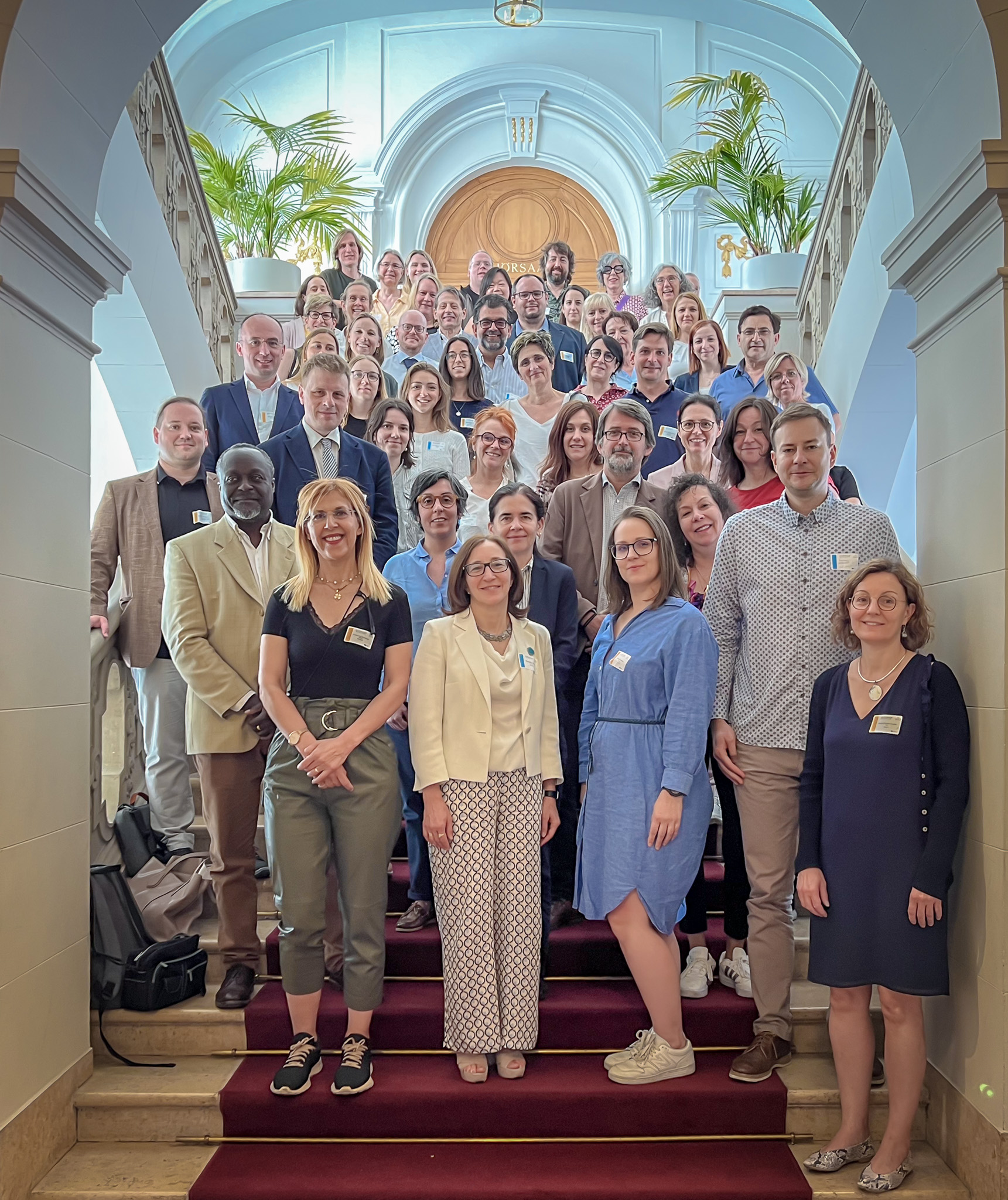
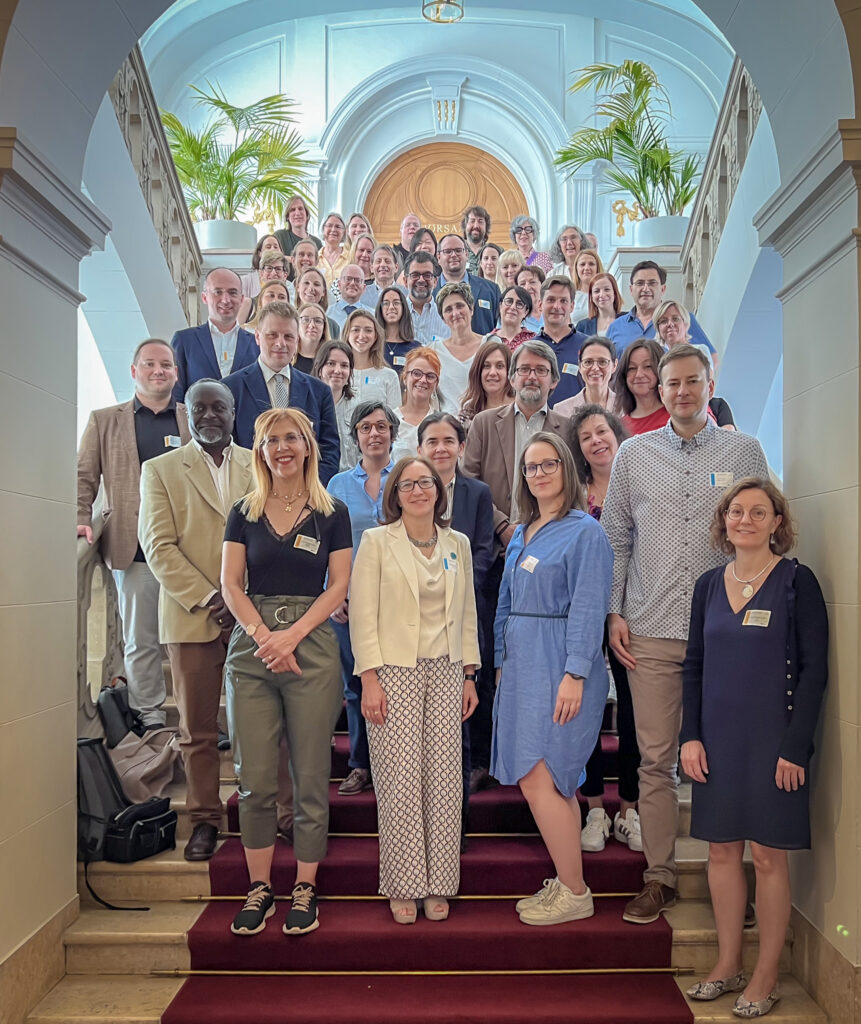
    A large group of people stand on a staircase. They are looking at the camera and smiling.

    Behind the portal’s development are 40 partners from 18 European countries. Here are just some of them!

    At the launch, partners got straight to work in preparatory workshops, welcomed strategic input from the European Commission and mapped out the first few steps.

    We will share progress of the portal’s development here and on our social media channels – listed below