At a glance
WP5 aims to define and validate high-quality criteria for cancer information provided through EU-CIP, ensuring that the portal delivers accurate, reliable, and user-friendly information adapted to diverse cultural and linguistic contexts across EU Member States.
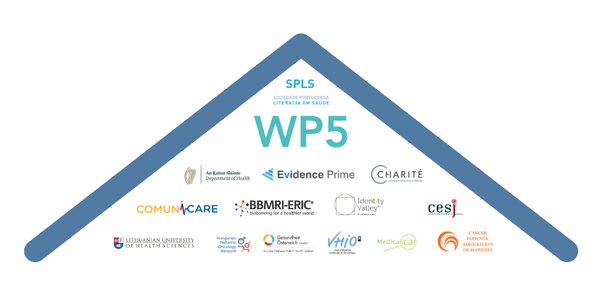
WP5 is led by SPLS and co-led by IDV with contributions by GOEG, VHIO, HUPON, DoHIE, CESJ, LSMU, CPAS, MESC, BIH/CHA, BBMRI-ERIC, ComCare, EVP.
The task
WP5 will develop and implement quality criteria to ensure EU-CIP content is accessible, accurate, and relevant for all target users including patients, survivors, and carers. Activities will include a literature review, stakeholder consultation with experts in cancer prevention, care, and health literacy through a Delphi panel, and pilot testing via focus groups and surveys. The process will establish a validated, evidence-based set of quality criteria incorporating ethical principles, with particular focus on trustworthy digitalisation and human-centered digital literacy.
WP5 will conduct comprehensive evaluation activities throughout the project lifecycle. This includes systematic review and feedback on information from WP3, ongoing quality assessments of all portal content, and evaluation of EU-CIP’s user-friendliness and accessibility. The work package will assess content structure, navigation ease, overall usability, and the portal’s effectiveness in engaging target audiences through metrics including user feedback, website analytics, and engagement rates.
A crucial component is the Ethical-Legal-Societal Impact (ELSI) Analysis, which encompasses stakeholder and target groups analysis, proactive identification of ethical, legal, and societal challenges, and Anticipatory Technology Ethics (ATE) assessment. This task will coordinate national ethics requirements and approvals, working closely with technical work packages (WP4 and WP6) to integrate ethical considerations into EU-CIP’s development.
WP5 will enhance the portal’s effectiveness in disseminating information through real-time implementation based on established quality criteria, ensuring the project’s replicability by documenting best practices, implementation processes, and providing comprehensive guidelines including technical specifications and user guides.
Deliverables will include:
- Validated quality criteria established through the Delphi process
- Evidence-based evaluation reports with actionable feedback
- ELSI and ATE analysis reports including national ethics requirements
- Best practice documentation and implementation guidelines for replicability
- Usability and accessibility assessment results
These outputs will ensure EU-CIP provides trustworthy, high-quality cancer information while promoting digital health literacy and serving as a replicable model for similar initiatives across Europe.